
Swarming Warning: It’s Termite Season on Vancouver Island


When most Vancouver Island residents think about pests that can damage a building, carpenter ants, rodents, or even woodpeckers may come to mind first. But there is another wood-destroying pest that deserves attention: the subterranean termite.
Subterranean termites are found on Vancouver Island and can cause significant damage to homes and commercial buildings when colonies gain access to structural wood. Unlike pests that make their presence obvious, termites can remain concealed underground, behind walls, beneath flooring, and inside wooden structural components for long periods.
As temperatures warm and termite activity increases, knowing what to look for can help Vancouver Island homeowners and businesses identify a potential problem before extensive damage occurs.
What Are Subterranean Termites?
Subterranean termites are social insects that live together in colonies. In British Columbia, western subterranean termites (Reticulitermes hesperus) are known to occur on Vancouver Island.

In their natural environment, termites actually perform an important ecological job. They consume cellulose found in dead trees, fallen wood, and other plant material, helping break it down and return nutrients to the ecosystem.
The problem begins when the cellulose they discover happens to be part of your house, rental property, shop, office, or other building.
A termite colony contains different castes, including workers, soldiers, and reproductives. The workers are responsible for finding food and feeding other members of the colony — and that food can include the wooden components of a building.
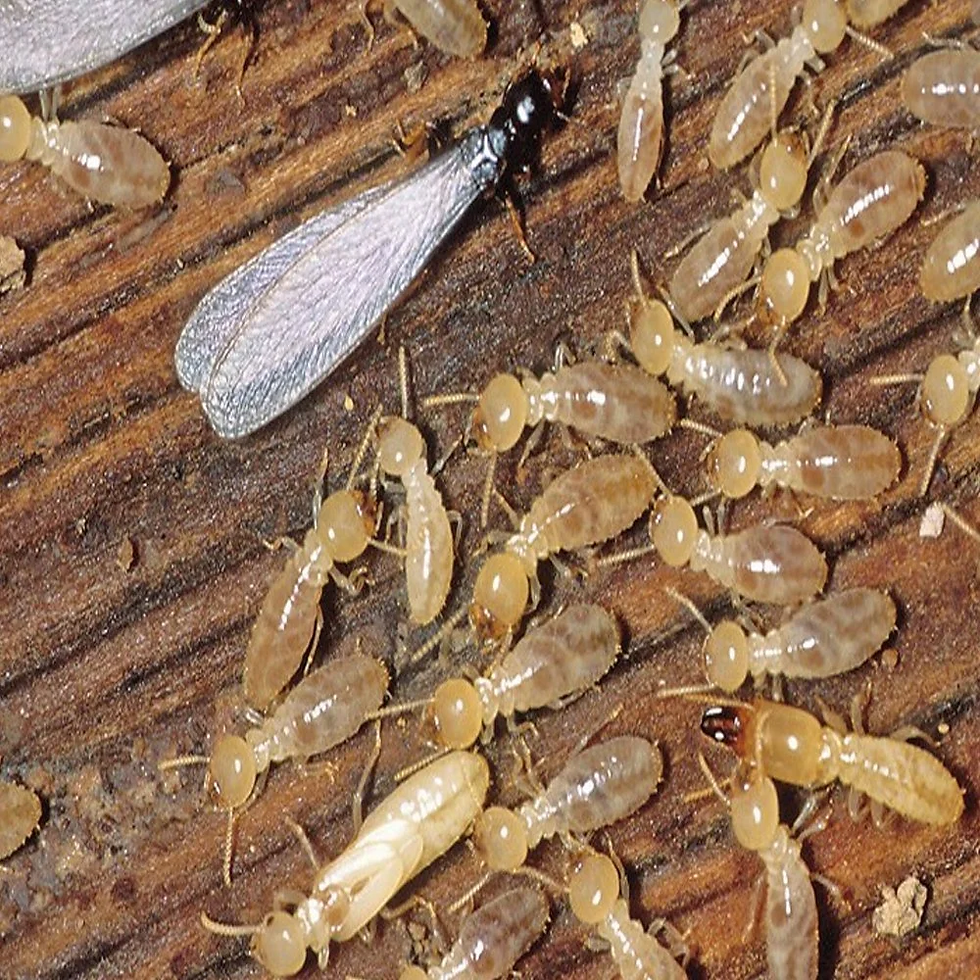
Unlike ants, termites generally have straight antennae and a broad body without the noticeably pinched waist of an ant. Winged reproductive termites, known as swarmers or alates, have two pairs of approximately equal-sized wings.
Why Vancouver Island Can Be Good Termite Habitat
Subterranean termites depend heavily on moisture. Their main nests are normally associated with soil or wood that has contact with the soil, and termites build protected shelter tubes that allow them to travel between the ground and food sources without being exposed to dry air.
Vancouver Island's relatively mild, moisture-rich coastal environment can provide suitable termite habitat, particularly around properties where wood, soil and excess moisture come together.
Conditions around a building that can increase the opportunity for termite activity include:

Wooden structures or siding contacting soil
Damp crawl spaces
Plumbing or exterior water leaks
Poor drainage around foundations
Rotting or water-damaged wood
Tree stumps and buried wood
Wood debris left beneath decks or buildings
Firewood stored against a structure
Wooden landscaping materials in contact with soil
Excessive moisture around the foundation
Termites don't need an obvious piece of exposed lumber to find their way into a building. Subterranean termites can construct mud shelter tubes across materials they can't eat, including concrete, to reach wood above them.
When Is Subterranean Termite Season?
One of the most noticeable periods of termite activity is swarming season. On Vancouver Island, subterranean termite swarms may occur in spring or fall, often when warm, sunny weather follows rainfall. Fall is an especially important time to watch for winged termites in British Columbia.
When a subterranean termite colony matures, winged reproductive termites leave to mate and potentially establish new colonies. Seeing a large number of winged insects suddenly appearing around a building — particularly during warmer spring conditions — is something worth investigating.
Finding discarded wings around windows, doors, light sources, basements, crawl spaces, or other areas of a building can also be an important clue.
However, don't assume that termites disappear once swarming season ends. A colony can remain active and continue feeding even when you don't see termites flying around.
Where Should You Look for Termites?
Because subterranean termites generally stay protected from open air, you may never see worker termites walking around your home.
Instead, look for evidence of their activity.
Pay particular attention to foundation walls, crawl spaces, basements, garages, deck supports, fence posts, plumbing penetrations, wooden landscaping structures, and anywhere wood comes close to or directly contacts soil.

One of the most recognizable signs is a mud or shelter tube running along a foundation or another surface. These narrow, soil-like tunnels provide termites with a protected route between their underground environment and a food source.
Other possible warning signs include:
Winged termites or discarded wings
Wood that sounds hollow when tapped
Wood that appears soft or damaged beneath the surface
Bubbling or blistering paint
Buckling or swollen flooring
Doors or windows that suddenly become difficult to open
Damage to wooden beams, joists, trim, flooring, or wall components
Some of these symptoms can also be caused by moisture, rot, carpenter ants, or other building problems. That's one reason professional identification is so valuable.
Why Termite Damage Can Become Serious
Termites consume wood from within, which means a piece of lumber may appear relatively normal from the outside while galleries have been created internally.
Over time, termite feeding can weaken structural components such as joists, beams, flooring, framing, and other wood products. The longer an active colony has access to a building, the greater the potential for expensive repairs.
This concealed behaviour is why termites are a pest you don't want to simply “wait and see” about.
If you discover something that looks like termite activity, getting it properly identified early can make a substantial difference.
How Can You Help Prevent Subterranean Termites?
You can't control everything happening beneath your property, but you can make the area around your building less attractive and accessible to termites.
Start with moisture management. Repair leaking pipes, faucets, gutters, downspouts, and exterior drainage problems. Keep crawl spaces appropriately ventilated and address persistent dampness.
Next, reduce unnecessary wood-to-soil contact. Keep lumber, firewood, cardboard, old stumps, and other cellulose-rich materials away from the foundation wherever practical. Deck posts and other structural components should also be appropriately installed to minimize direct soil contact.

Regularly inspect accessible areas of your property, especially foundations and crawl spaces. Watch for new mud tubes, damaged wood, discarded wings, or unexplained changes to flooring and wooden components.
And if something doesn't look right, don't start tearing apart walls or spraying random products. Termites live as colonies, and eliminating a few visible insects doesn't necessarily address the source of the infestation.
Think You Have Termites? Call Sentry Pest Control
Termite control starts with correct identification and a thorough inspection.
Our process at Sentry Pest Control begins with an inspection so our trained pest control professionals can assess what's happening, identify signs of termite activity, look for potential entry points and conducive conditions, and determine an appropriate plan of action for the property.
That professional assessment is especially important with subterranean termites. What you see on the surface may represent only a small part of a much larger colony operating underground or within the structure.
Whether you're a homeowner worried about an unusual mud tube on the foundation or a business owner who has discovered suspicious wood damage, acting early is always the better approach.
Don't give termites more time to make themselves at home. Contact Sentry Pest Control to schedule an inspection and find out what's really happening on your property.


Comments