
When Wasps Move In: How Professionals Protect Your Property


Few pest problems make homeowners more uneasy than discovering an active wasp nest on their property. Whether it’s hidden inside a wall, hanging from a roofline, or buried underground near a garden path, wasps can quickly become aggressive when they feel their colony is threatened.
On Vancouver Island, wasp activity increases dramatically during the warmer months, especially from late spring through early fall. At Sentry Pest Control, we help homeowners safely locate, identify, and remove wasp nests before they become dangerous for families, pets, and visitors.
But not all wasps — or wasp nests — are the same.
Understanding the different species, nesting habits, and risks involved is one of the most important parts of effective wasp control.
Common Types of Wasps Found on Vancouver Island
Vancouver Island is home to several species of social wasps, each with different behaviours and nesting preferences.
Yellowjackets
Yellowjackets are by far the most common and problematic wasps we deal with on Vancouver Island. These wasps are highly territorial and can become aggressive if disturbed. Unlike bees, yellowjackets can sting multiple times and will often swarm to defend their nest.

Yellowjackets are especially attracted to:
Food
Sugary drinks
Garbage
Compost
Outdoor eating areas
There are two common types we encounter:
Ground-Nesting Yellowjackets
These wasps build nests underground, often using abandoned rodent burrows or natural cavities in the soil.
Ground nests are particularly dangerous because they can be difficult to spot until someone accidentally disturbs them while:
mowing the lawn,
gardening,
walking nearby,
or playing outside.
Aerial Yellowjackets
These nests are often found:
under decks,
inside sheds,
in roof overhangs,
under siding,
or inside wall cavities.
As colonies grow larger later in summer, these nests can contain hundreds or even thousands of wasps.
Paper Wasps
Paper wasps are generally less aggressive than yellowjackets but can still sting when threatened. They are known for their distinctive umbrella-shaped nests made from a paper-like material created by chewing wood fibres.
Paper wasp nests are commonly found:
under soffits,
attached to railings,
inside carports,
under patio furniture,
or around outdoor structures.
Because these nests are often exposed and visible, homeowners sometimes attempt to remove them on their own — which can be risky without proper protective equipment and treatment methods.
Bald-Faced Hornets
Technically a type of yellowjacket, bald-faced hornets are larger and more intimidating in appearance.

These wasps build large enclosed aerial nests that can sometimes resemble football-shaped grey paper structures hanging from:
trees,
rooflines,
sheds,
or tall shrubs.
Hornets can become extremely defensive if their nest is disturbed and are capable of delivering painful stings.
Where Wasp Nests Are Commonly Found Around Homes
One of the challenges with wasp control is that nests can appear almost anywhere on a property. At Sentry Pest Control, we frequently locate nests in places homeowners would never expect. Some of the most common nesting locations on Vancouver Island include:
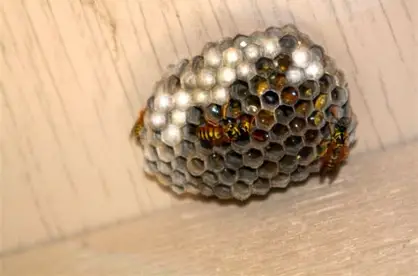
Rooflines and Soffits
Warm, protected spaces under roof overhangs are ideal nesting sites for many wasp species.
Attics and Wall Voids
Small openings around vents, siding, or roof penetrations can allow wasps to establish nests inside structural voids. These infestations often become noticeable when homeowners hear buzzing inside walls or notice increased wasp activity around a specific area.
Decks and Patios
Ground nests are commonly found near:
decks,
retaining walls,
patio stones,
and garden edges.
Sheds and Garages
Quiet, sheltered structures are attractive nesting locations throughout the summer.
Trees and Shrubs
Hornet nests are often suspended from branches or hidden within dense foliage.
Underground Cavities
Many yellowjacket species prefer underground nesting sites that remain hidden until accidentally disturbed.
Why DIY Wasp Nest Removal Can Be Dangerous
It’s understandable that many homeowners want to deal with a wasp nest immediately after discovering it. However, attempting to remove a nest without proper training or equipment can be extremely dangerous. Wasps defend their colonies aggressively, especially later in the season when populations are at their largest.
DIY removal attempts can result in multiple stings, swarming behaviour, incomplete nest elimination, or even driving surviving wasps deeper into structures. This is especially risky for children, pets, seniors, or individuals with allergies to stings.
Furthermore, store-bought aerosol products may also fail to fully eliminate larger or hidden nests, allowing colonies to recover and remain active.
How Sentry Pest Control Effectively Removes Wasp Nests
At Sentry Pest Control, safety is always our first priority — for both our customers and our technicians. Our approach begins with identifying the wasp species, nest location, colony activity levels, access points, and surrounding environmental conditions. Every nest situation is different, which is why proper inspection is critical before treatment begins.

Step 1: Inspection and Identification
We first determine:
what type of wasp is present,
where the nest is located,
how active the colony is,
and whether there may be multiple nests on the property.
Wasp activity can sometimes indicate hidden nests inside walls, attics, or underground areas that are not immediately visible.
Step 2: Expert Treatment Planning
Once the nest is identified, we select the safest and most effective treatment strategy for the situation. Often, we wear professional grade bee suits to keep ourselves protected, and we will recommend you and your family stay at a careful distance while performing the treatment and removal of the nest.

The treatment typically involves targeted spray applications directly into the nest, dust treatments for voids, and controlled removal procedures. Our treatments are carefully applied according to federal and provincial regulations.
Step 3: Nest Removal and Monitoring
Depending on the nest type and location, physical removal is typically performed once the colony has been neutralized.
In some situations, monitoring may be recommended to ensure no additional activity remains. We go over what to look for with you, and when you would want to give us a call to come scope out any activity later on.
Step 4: Prevention Recommendations
Long-term prevention is an important part of Integrated Pest Management. We will help you identify conditions that may attract future nesting activity around your property and discuss ways that we or you can mitigate a surge in wasp nests. We will counsel you regarding such areas including:
structural entry points,
food sources,
standing water,
garbage storage issues,
and landscaping conditions.
Professional Wasp Control Gives You Peace of Mind
Discovering a wasp nest can be stressful, especially when nests are located near entryways, children’s play areas, decks, or heavily used outdoor spaces. Professional wasp control helps ensure the problem is handled safely, effectively, and with minimal risk to your family and property.
At Sentry Pest Control, we focus on identifying the source of the activity, removing nests responsibly, and helping reduce the likelihood of future infestations.
Because when it comes to wasps, protecting your home starts with proper identification, safe treatment methods, and proactive prevention.


Comments